

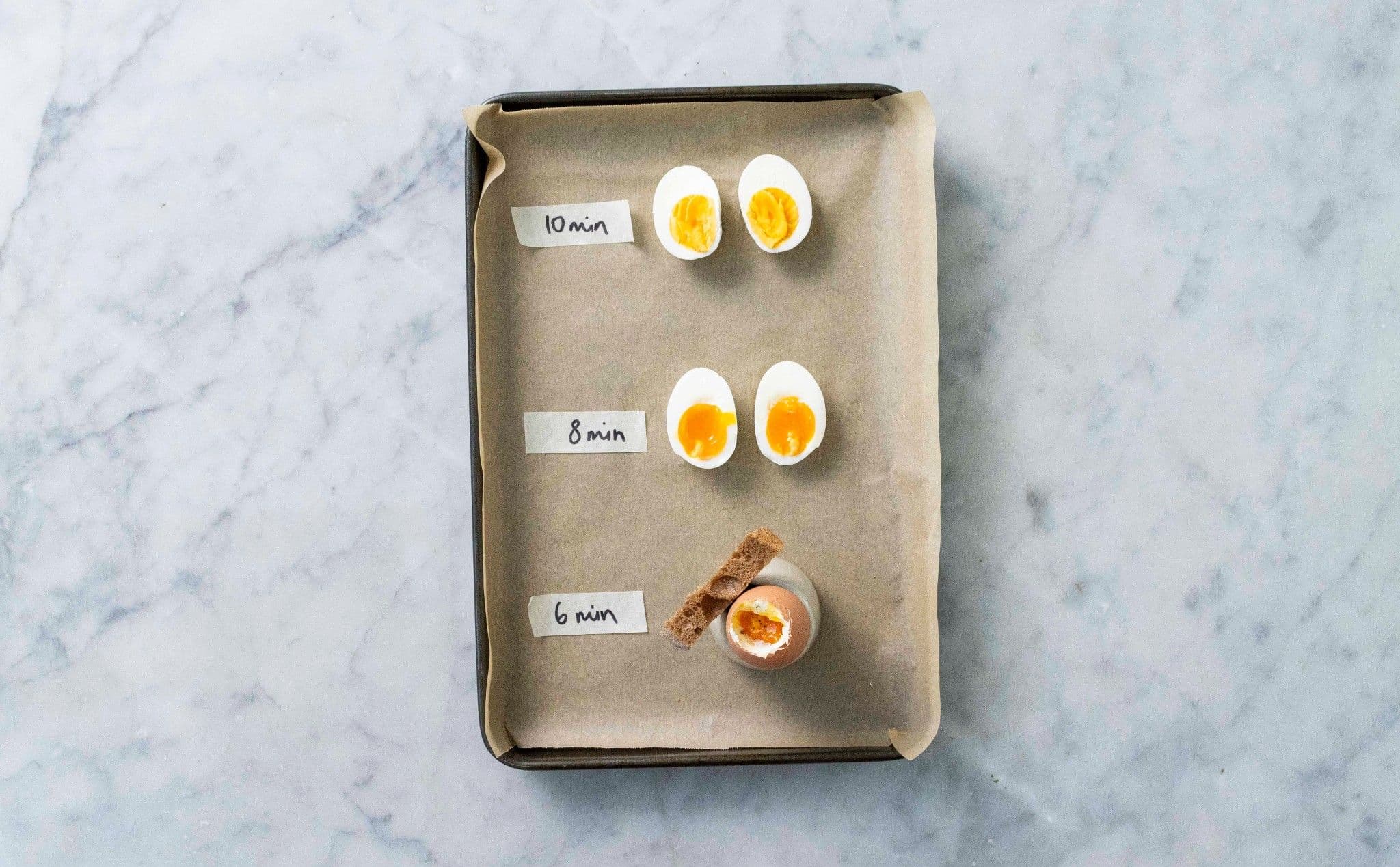
Boiling an egg is one of those culinary rites of passage — deceptively simple, maddeningly easy to get wrong. Too soft and it oozes unpredictably. Too hard and you're one sulphurous ring away from regret. But done right? A boiled egg is a small, quiet luxury: jammy-centered, silky-edged, and ready to top toast or elevate a salad with almost no effort.
Here’s how to make them properly — whether you like yours soft, medium, or satisfyingly firm.
Start with Slightly Older Eggs
Fresh isn’t always best. For boiled eggs that peel like a dream, reach for eggs that are about a week old. Slightly older eggs have a higher pH, which means the whites are less likely to cement themselves to the shell. That means fewer divots and more pristine, Instagrammable halves.
Why You Should Start Your Eggs in Boiling Water
Skip the cold water start. Lowering fridge-cold eggs into already boiling water helps the whites set faster, which prevents sticking to the shell. It also ensures your timing starts the moment the eggs go in, making it far easier to get the yolk just how you like it. Limit it to six eggs at a time so the water temp doesn’t dip too much — this isn’t a group project.
Use a slotted spoon to lower the eggs in gently and avoid cracks from the shock.
Timing Your Eggs: From Runny to Firm
Once your eggs are in boiling water, set a timer and trust it:
- 4–6 minutes: Soft-boiled, runny yolk, tender white
- 7–9 minutes: Medium-boiled, just-set yolk, perfect for ramen
- 10–12 minutes: Hard-boiled, golden center, no greying in sight
(These timings assume cold eggs into boiling water. Using room-temp eggs? Shave off about 30 seconds.)
The Hybrid Simmer Method
If you’re the gentle type, try the hybrid approach. Start the eggs in boiling water, then immediately reduce to a simmer. It’s kinder to the eggs — less cracking, more even cooking.
- 7–8 minutes for soft
- 9–10 minutes for medium
- 11–12 minutes for hard
This method won’t win a race, but it might win you the perfect texture.
TIP: The Ice Bath Is Non-Negotiable
When the timer dings, don’t dilly-dally. Scoop your eggs into an ice bath for at least 10 minutes. This stops the cooking (no chalky yolks here), helps the membrane contract, and makes peeling easier. Yes, it’s cold. Yes, it matters.
Peeling Tips: for the inpatient
Peeling shouldn’t feel like excavation. After the ice bath:
- Tap the egg on a hard surface
- Gently roll it to loosen the shell
- Peel under running water or in a bowl of water for bonus ease
Peeling warm eggs? A known tragedy. Wait it out.
Now What?
Jammy eggs on toast soldiers. Trout and soft-boiled egg rice bowl. Soft-boiled in ramen. Mashed into egg salad. Or just with flaky salt and a moment to yourself.
“Because sometimes, all you need is one perfect egg.”