

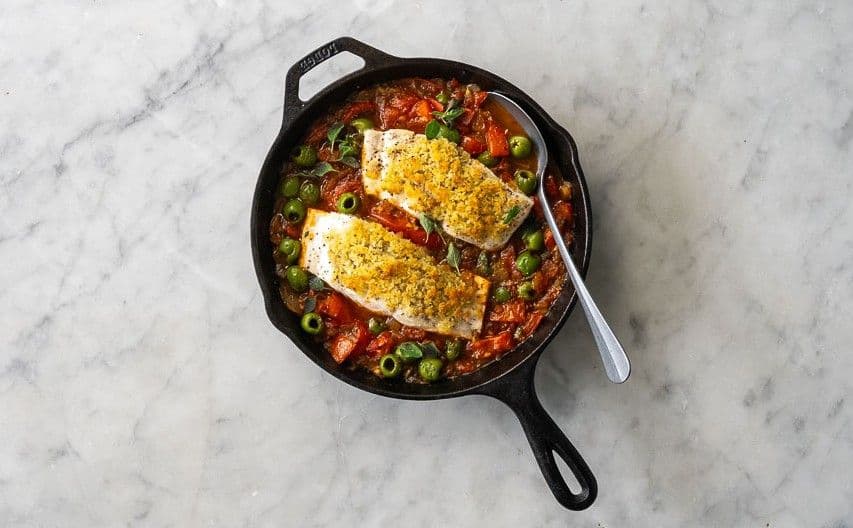
Purge your cookware and get a pan that is non toxic, doesn’t stick, and that will last forever (or so).
Whether they’re selecting produce to cook with or buying a new pan, most experienced cooks know that when it comes to cooking well, quality counts. The food we put on the table is the sum of its parts, and there’s no hiding the bitterness in broccolini past its best-before as there’s no perfect egg cooked on an awful pan.
A bad workman blames his tools, but you can blame the non-stick pan you bought two years ago that has lost its mojo.
Enter cast iron; the cook’s armor, the chef’s trick, the one thing you need if you’re going to take cooking seriously. It looks great on your kitchen’s open shelves, and can be hung out in full display with pride.
Cast iron is a classic choice for non-stick cooking. Season your pan, avoid harsh detergent and the dishwasher, and one great quality pan is all you need. What might feel like an expensive purchase is nothing when you don’t ever have to replace it.
If we need further proof, it turns out that cast iron is the chef’s secret weapon when they cook at home.
“I never wash mine,” says Shannon Bennett. He holds up a blackened, deeply seasoned pan glistening with oil while standing in his Byron Bay kitchen. “I don’t use soap, I don’t even use hot water. I wipe it out lightly with paper towel and coat it with olive oil,” says the chef.
The result is a pan that doesn’t stick, that cooks a perfect steak, or savoury galette, or piece of fish.
Ironclad Co pans are used by the likes of Lennox Hastie, Al Brown, Rodney Dunn and our own Editor in Chief, Kate Gibbs, in their own homes. Shannon Bennett says it’s his best and favourite pan to use.
For many home cooks, cast iron might feel like a troublesome addition to the kitchen. There’s the seasoning, the upkeep, the fact that it looks like almost any substance out there would stick to it.
Here’s what those chefs know that you might not.

Cast-iron cookware lasts a lifetime
A quality cast iron pan can be passed down several generations if it’s looked after well. It’s durable and will even get better with age.
Cast iron has been used for making cookware for thousands of years, with a particularly long history in Asia. It was developed before stoves in homes were a thing, and many pans are still designed to withstand the heat of an open fire. It won’t warp over an intense heat. You can use a cast iron pan in the oven, on induction, over a campfire, or whatever the next gen is going to cook over.
Cast-iron cookware is formed from molten steel and iron, which creates one solid piece of cookware that is extremely durable.
Cast iron is safe to use and non-toxic
Non-stick cookware was the best new thing when it landed in our kitchens years ago, and we’ve seen many new fads come and go over the years.
The term non-stick usually refers to the type of pan that’s been dipped in something so resistant to, well, everything, that even your pot stickers will slide right off. Coatings are generally made of either ceramic or polytetrafluoroethylene (PTFE). But non-stick coatings can scratch and ding easily, causing them to lose their slickness.
We now know that non-stick surfaces are often toxic — we’re cooking plastic into our food. If heated to high temperatures over time – for example, via cooking – the uppermost layer of non-stick pans can release toxic fumes, which can permeate the food we eat.
When it’s not coated with any other material, cast iron is completely natural and free of toxins.
Not all cast iron will scratch your induction cooktop
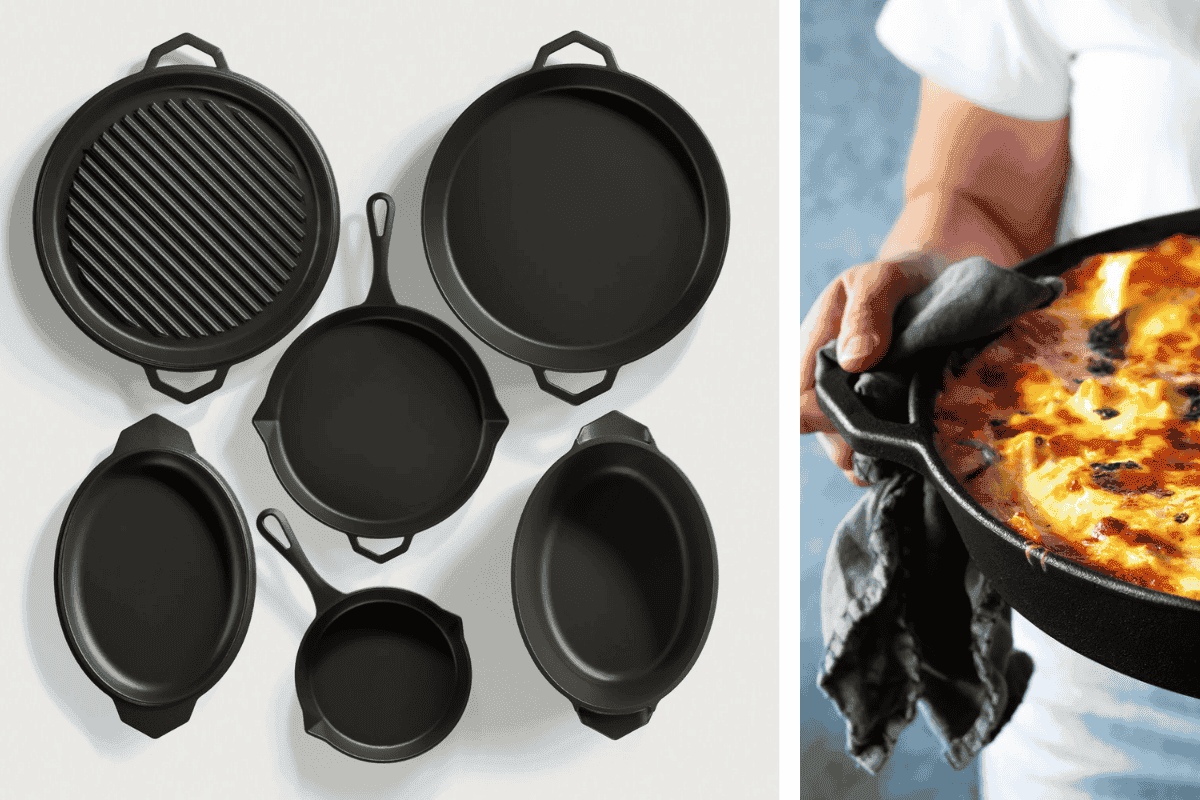
Some cast iron can be rough. Ironclad Co set out to create beautiful pans that could be used in top kitchens as well as the campfire. They’re inspired by vintage cast iron pieces from the 1800s, but have signature finishing techniques that create a smooth surface that feels like ceramic.
The company grinds and polishes the cooking surface and base so the cast iron is both non-stick and gentle enough for delicate cooktops, including induction.
How to season a cast iron pan
There’s a lot of folklore around the ‘proper’ way to care for cast iron but the process is actually straight-forward. If you don’t use soap on it and never put it in the dishwasher, oil it well and often, it will look after itself.
Season a new pan, and then maybe every year or two, and less with time. You can re-season it if you spot a build-up of black residue on the pan, or if your steak is sticking to it again. Scan your house for a guilty soap-using washer-upper while you’re at it.
Here’s a step-by-step guide to seasoning a cast-iron pan:
1. Place a tray or foil on the bottom rack of your oven to catch any oil drips.
2. Heat the oven to 180–200 degrees Celsius.
3. Rub the pan lightly with a neutral edible oil. Olive oil, coconut oil and the like work well.
4. Place the pan inside the oven and allow it to bake for at least one hour. Then, turn off the heat and allow the pan to cool in the oven.
5. Once cool, the pan can be safely stored away. You can repeat this process again to reach the desired level of seasoning.
Ironclad Co produces 100 percent cast iron cookware — despite its name — and the iron will change over time from a golden bronze when new to a rich dark black when it’s well seasoned and maintained.