

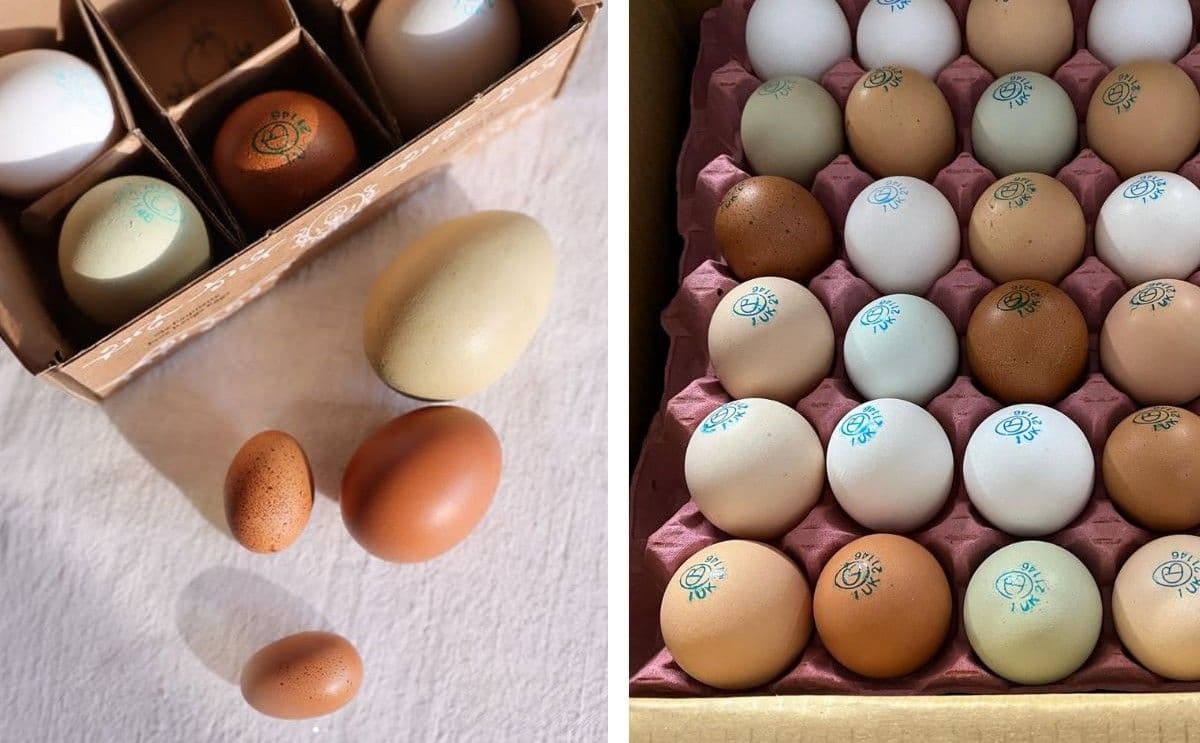
There are eggs and then there are eggs-ellent eggs — the kind that are worth getting out of bed on a chilly day good. It comes down to the egg itself; where it came from, which beautiful hen laid it and what she ate, how she lived, as well as who cared for her (or didn't).
Next up: do you even know how to boil an egg? It may sound like you can't cook if you can't boil an egg. But it's harder than it looks, and there are many home cooks out there who can turn around a mean t-bone, but can't get that dipp-able yolk quite right in the morning.
Buy a Good Egg
Pay the extra couple of dollars and buy only free range — organic if you can. If you saw what those caged chooks look like in their dens of hell, you'll steer clear. And if you saw what they ate, how sick the whole process feels and looks, you'd change your habits forever. Buy the best eggs you can afford, and that you can get your hands on.
Egg farming to love: CackleBean
Shannon Bennett loves "CackleBean" eggs. Raised in the Cotswold, England, these eggs are something special. The farmers hatch their own eggs and watch their chicks grow into happy chickens who make exquisite eggs. This is what a day looks like at CackleBean egg farm.
“First thing in the morning as the dawn in breaking, we let the girls and boys out, we check the feeders, drinkers, birds and nest boxes.
“Once all the sheds are checked we then start collecting our lovely eggs (we do pause for a cuppa!). We check for cracks, funny shapes and then we stamp them with our special CB mark, box in our beautiful boxes and deliver fresh from the farm to you...
“At lunchtime we check the sheds again, and then put them to bed as dusk falls, to keep them safe from our Cotswold wildlife. We check their feeders, drinkers and make sure we have no escapees — all tucked in, we say goodnight and see them in the morning,” the farmers explain.
Know Your Egg
Different countries have different rules when it comes to classifying eggs as organic, free range, pasture-raised and the very many other terms. In Australia, Australian Eggs gives a thorough run-through on what to look out for, what terms like "farm fresh" and "hormone free", "RSPCA approved" and "Omega-3 enriched" all mean.
The main difference between organic and free range is organic eggs are produced without the use of any chemicals. There is only a relatively small number of organic egg farms in Australia so look for a certified organic logo on the label to verify the claim. Free range eggs come from hens that have access to the outdoors. Farmers open up doors to the sheds every morning to let the hens out and close them up in the late afternoon when the hens are back inside. National free range egg laws require hens to have "meaningful and regular access" to an outdoor range during daylight hours and be free to roam and forage outside. The maximum outdoor stocking density by law is one hen per square metre, or 10,000 hens per hectare, and farmers must display their stocking density on the egg carton.
We like "pasture-raised eggs" as a minimum requirement. This is a type of free range production that emphasises lower stocking densities and rotational grazing so there is always ground cover and grazeable plant species for the hens. However, hens don't eat grass like cows and sheep so pasture-raised hens are fed a grain-based diet like hens in other production systems.
Cage eggs are produced from hens that are housed in cages inside large, climate-controlled sheds. Cage eggs make up around 40 per cent of supermarket egg purchases in Australia. It's time we move the needle on this! Make the swap for your health, the quality of what you're eating, and for the chooks.
Now it's time to cook your eggs. Click here for the best way to boil an egg. You'll be a better cook by the end of this! Learn How to Boil an Egg.